 Crete Island Guide
Heraklion Archaeological Museum holds almost everything that made Knossos and Phaistos famous on any guide to Crete, Greece, the frescoes, the gold, the Phaistos Disc and the Snake Goddess figurines, in one building a short walk from the harbour. This page covers the confirmed timed-ticket rule, opening hours, what to actually look for inside, and how to book.
Quick answer Heraklion Archaeological Museum in one minute
Heraklion Archaeological Museum holds the Minoan finds that made Crete famous, including the Phaistos Disc, the Bull-Leaping fresco and the Snake Goddess figurines, most of it excavated at Knossos and Phaistos. Admission is $22.50 (€20), reduced to $13.47 (€12) for EU citizens 65 and over between November and March. Tickets are valid only for the booked day and time slot, a firmer rule than Knossos uses. Summer hours run 08:00 to 20:00 most days, with a later 13:00 start on Wednesdays. Allow 1.5 to 2 hours for the main galleries, more if the Minoan collection interests you in depth.
Key takeaways
- Book the museum ticket with audio guide ahead, since your slot is fixed once booked.
- Visiting Knossos the same day: a combined e-ticket covers both entries in one booking.
- Go early or on a Wednesday afternoon. A single coach group can fill the main Minoan gallery for ten minutes, by our observation.
- Seen the frescoes at Knossos already. The originals, not the painted copies, are here.
Key facts
Opening hours
| Summer (28 April–31 October), Mon, Tue, Thu–Sun | 08:00–20:00 |
|---|---|
| Summer Wednesdays | 13:00–20:00 |
| Winter, Mon–Sun | 08:30–15:30 |
| Winter Wednesdays | 10:00–17:00 |
Closed No weekly closure beyond the short Wednesday morning schedule. Ministry of Culture sites close nationally on 1 January, 25 March, 1 May, Easter Sunday and 25-26 December.
Admission
- Adult
- $22.50 (€20)
- Reduced
- $13.47 (€12), EU citizens and other EU-country citizens 65+, 1 November–31 March only
- Free
- 6 March, 18 April, 18 May, the last weekend of September, every 1st and 3rd Sunday from 1 November to 31 March, 28 October
Planning it
- Time needed
- Not stated by the museum. Our routing: 1.5 to 2 hours for the main Minoan galleries.
- Book ahead
- Recommended — a few days
- Address
- Xanthoudidou & Hatzidaki str. 1, 712 02 Heraklion (main entrance at Xanthoudidou 2)
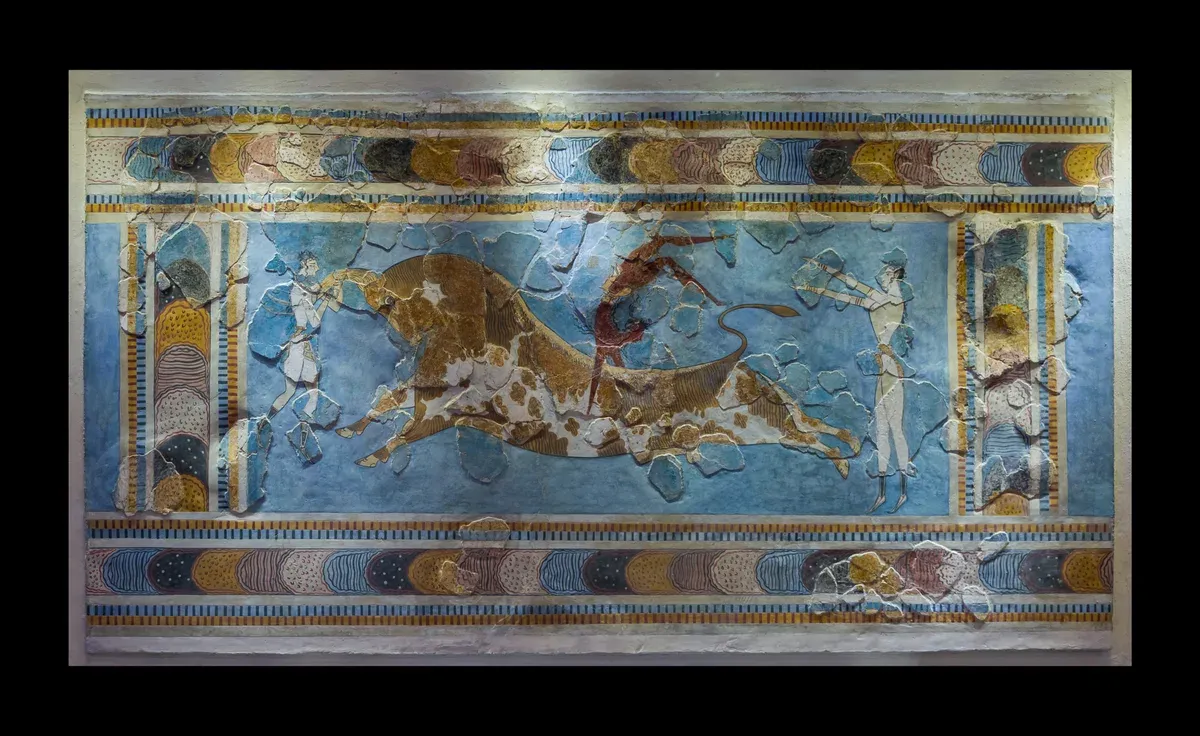
Photo: Jebulon, CC0, via Wikimedia Commons
Heraklion Archaeological Museum Tickets
Two ways to book, depending on whether you are visiting the museum alone or pairing it with Knossos the same day.
Visiting just the museum, or pairing it with Knossos the same day?
| Option | Price | Includes | Best For | Book |
|---|---|---|---|---|
| Museum ticket + audio guideMuseum-only visitors | $28.87 | Museum entry plus an audio guide app through the Minoan collection | Visitors doing the museum on its own | Check Availability |
| Knossos + museum e-ticketsSame-day Knossos and museum visitors | From $50.65 | Knossos and museum entries, each with its own audio guide, in one booking | Pairing the palace with the finds it came from | Check Availability |
Prices are each platform's own listed figure in US dollars against the Ministry's own gate price of $22.50 (€20). The Ministry's older combined Knossos-and-museum ticket is no longer valid, per the museum's own page. Figures current for Q4 2026.
Book Your Museum Ticket
Both cards include a timed ticket and an audio guide, the difference is whether Knossos is bundled in.
 from $28.87
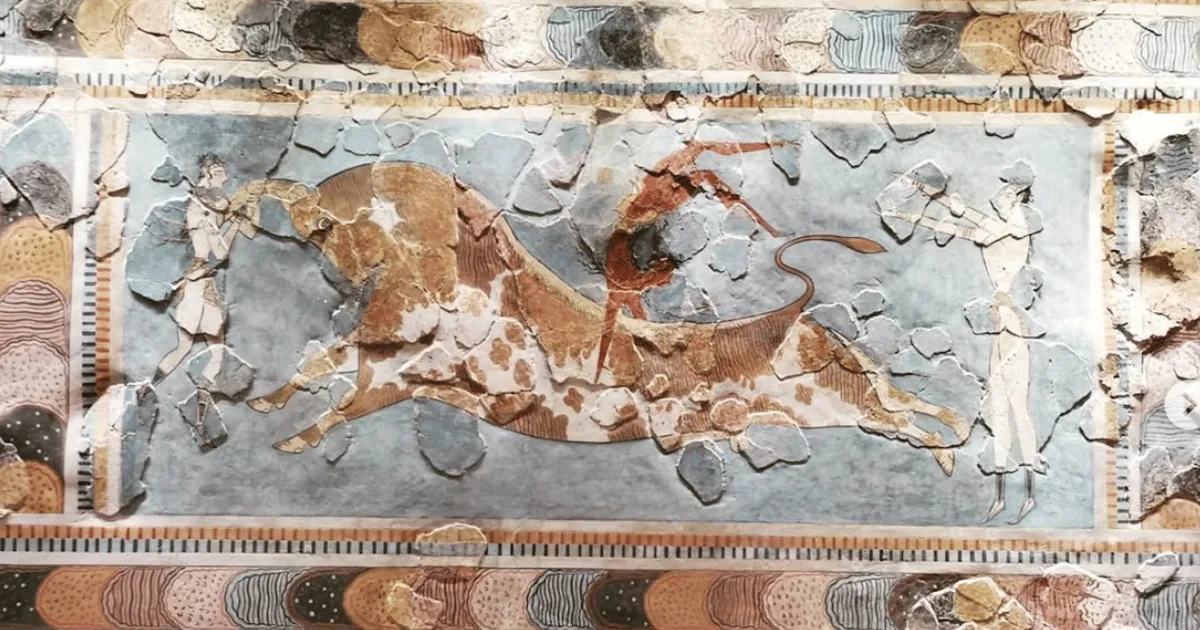
Heraklion Archaeological Museum Ticket & Audio Guide
Entry to the Heraklion Archaeological Museum with an audio guide app, the room-by-room route through the Minoan collection.
Check Availability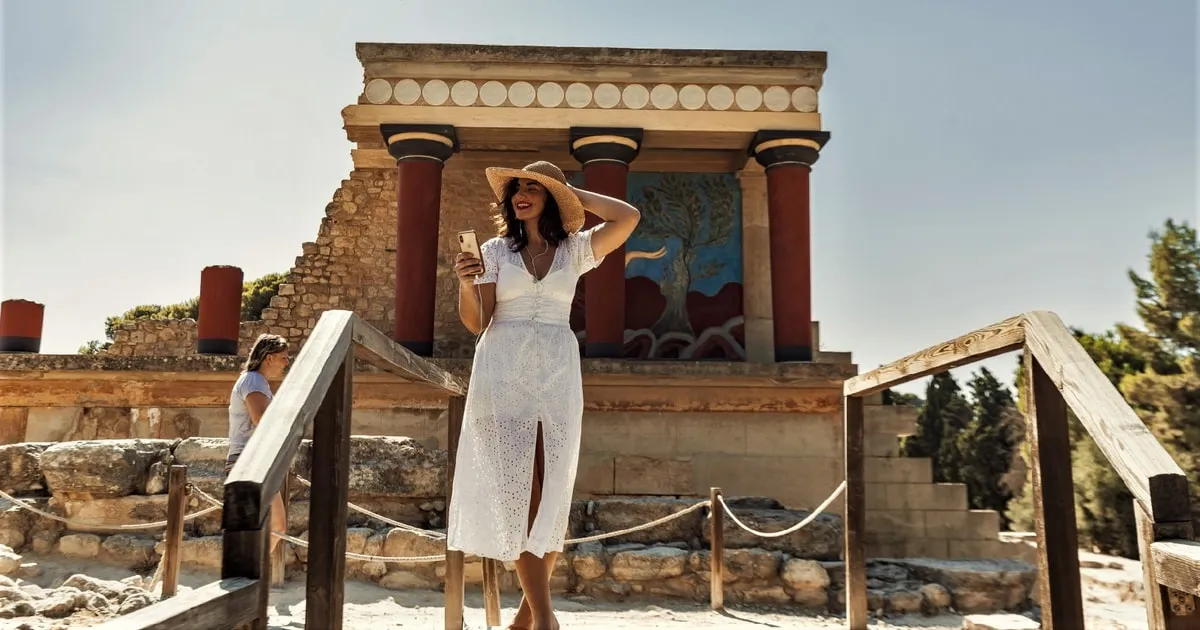 from $50.65
Knossos Palace and Museum E-Tickets with Audio Guides
Two e-tickets in one booking, Knossos and the Heraklion Archaeological Museum, each with an audio guide, so the frescoes and the palace they came from fit one day.
Check AvailabilityPrices, ratings and details are the platform's own. dollar figures are the listed prices — the platform bills in your account's currency.
What the Museum Is and Why It Matters
Heraklion is famous well beyond Crete largely because of what sits in this one building, the finds that turned a Bronze Age palace into a story the whole world knows.
A Museum Built Around One Civilization
Two different founding dates appear depending on the source, and both are worth knowing. Wikipedia traces the collection back to 1883, a simple gathering of antiquities during the first rediscovery of Minoan civilization on Crete. The museum's own official site instead dates its founding to 1908, the point at which that collection became a formally organised museum.
Either way, it now holds, in Wikipedia's words, "by far the most important and complete collection" of Minoan artifacts anywhere, drawn from Knossos, Phaistos and sites across the island. Most of what made Knossos famous as a story, rather than a field of low stone walls, is physically here: the Phaistos Disc, the Snake Goddess figurines, a bull-leaper ivory figurine, and the frescoes whose originals were removed from the palace walls for conservation, replaced there by painted copies.
Why the Finds Left Knossos
Excavated frescoes, pottery and jewellery are fragile in a way standing stone walls are not, and the Ministry of Culture concentrates Crete's Minoan finds in this single, climate-controlled building rather than displaying them in the open air where they were dug up. That is also why a Knossos-only visit leaves out most of the objects that explain Minoan daily life and belief. Seeing both sites the same day is less a choice between two attractions than one story told in two locations.
History and collection description from the museum's own published history, summarised on Wikipedia.
The Building: Earthquakes and a Bauhaus Rebuild
The museum's current building is itself a story of three earthquakes and a Modernist reconstruction, not just a container for the Minoan galleries.
The First Dedicated Building
A dedicated museum building went up between 1904 and 1912 at the urging of archaeologists Iosif Hatzidakis and Stefanos Xanthoudidis, replacing the original 1883 collection's makeshift housing. Three earthquakes, in 1926, 1930 and 1935, nearly brought that building down.
The Current Antiseismic Building
In 1935 the museum's director, Spyridon Marinatos, commissioned architect Patroklos Karantinos to design a new, earthquake-resistant building, constructed between 1937 and 1940 on the site of a destroyed Roman Catholic monastery. The result is a Modernist, Bauhaus-influenced structure, unusual for a Greek museum of its era. It was damaged again during the German invasion and bombing of 1941, though the collection itself survived intact, and the museum reopened to the public in 1952.
A new wing followed in 1964, and a major renovation ran from 2006 to 2013, with the museum reopening in close to its current form.
A Reminder the Ground Still Moves
A magnitude 6.2 earthquake on 22 May 2025 damaged four exhibits at the museum, per published accounts, a reminder that Crete's seismic activity reaches indoor collections as well as ruined palaces. We found no official notice of a resulting closure, so treat this as background rather than a reason to change travel plans.
Building history from Wikipedia.
Room by Room: How the Exhibition Is Laid Out
The museum's own exhibition page lays out a specific route, and following it in order makes more sense of the collection than wandering at random.
27 Rooms, Two Floors
Following a renovation the museum's own site dates to completion, the collection is laid out across 27 numbered rooms. The route starts on the ground floor with the Minoan Collection, Rooms I to XII, covering seven millennia from the Neolithic period (7000 BC) to Roman times, in the museum's own phrasing. It then moves to the first floor for the Minoan Frescoes in Room XIII and the Historic Period in Rooms XV to XXII, before returning to the ground floor for the Sculpture Collection in Rooms XXVI and XXVII.
The Side Rooms Most Visitors Skip
Two rooms carry material easy to miss on a quick visit. Room XXIII, on the first floor, holds the private collections of Stylianos Giamalakis and Nikos and Theano Metaxas, donated pieces kept separate from the main chronological run. Rooms XIV and XXV, the museum's own site states, trace "the echo of the Minoan past of Crete in ancient and modern times", essentially how later Cretans and the wider world kept referencing Minoan imagery long after the palaces fell.
Room numbering and layout from the museum's own exhibition page.
Highlights: What to See First
The museum's own exhibition page names a short list of star objects by name, worth seeking out deliberately rather than hoping to stumble across them.
The Phaistos Disc
A fired clay disc stamped with 45 distinct symbols in a spiral pattern, found at Phaistos in 1908 and still undeciphered. It is one of the most photographed single objects on Crete and small enough to miss if you are not looking for its case specifically.
The Bull-Leaping Fresco and the Prince of the Lilies
The Bull-Leaping fresco original, reproduced as a copy on the palace walls at Knossos, shows a figure vaulting over a charging bull, flanked by two other figures. The Prince of the Lilies fresco, a crowned or plumed youth among lily blooms, is named by the museum itself alongside it as one of the exhibition's central frescoes, both clearer windows into Minoan wall painting than the repainted copies on site at Knossos.
The Snake Goddess Figurines and the Bull's-Head Rhyton
Small faience figures holding snakes in each hand are among the most reproduced images of Minoan religious art anywhere, their exact religious meaning debated rather than settled. The museum's own list also names a stone bull's-head rhyton, a ceremonial pouring vessel carved as a bull's head, as one of its must-see pieces, alongside a gold Bee Pendant and the carved stone Hagia Triada Sarcophagus.
Kamares Ware and the Linear B Tablets
Polychrome Kamares Ware vases, painted pottery named for the cave sanctuary where it was first identified, show the decorative side of Minoan craft. The Linear B tablets excavated at Knossos, Mycenaean-era administrative records, show its bureaucratic side, the two together covering the gap between art and administration that defines how archaeologists actually understand Minoan society.
Collection highlights from the museum's own exhibition page.
The Sculpture Collection and the Museum Garden
Two parts of the museum sit outside the main Minoan run entirely, and both are easy to walk past without realising what they are.
The Sculpture Collection
The two ground-floor Sculpture Collection rooms function, in the museum's own words, as "a sort of sculpture gallery" independent of the rest of the exhibition, covering the 7th century BC to the 3rd century AD. Archaic statues here demonstrate an early Cretan contribution to Greek monumental sculpture, and a series of Roman-era busts of emperors sits alongside Roman copies of well-known Classical statue types, evidence of the island's prosperity once Gortyn became capital of the Roman province of Crete and Cyrenaica.
The Venetian Ruins in the Garden
The museum's own garden preserves the ruins of the Venetian Monastery of St Francis, a reminder that the current building stands on ground with its own, much later history, predating the Ottoman and modern periods that shaped the rest of Heraklion.
Collection and garden detail from the museum's own exhibition page.
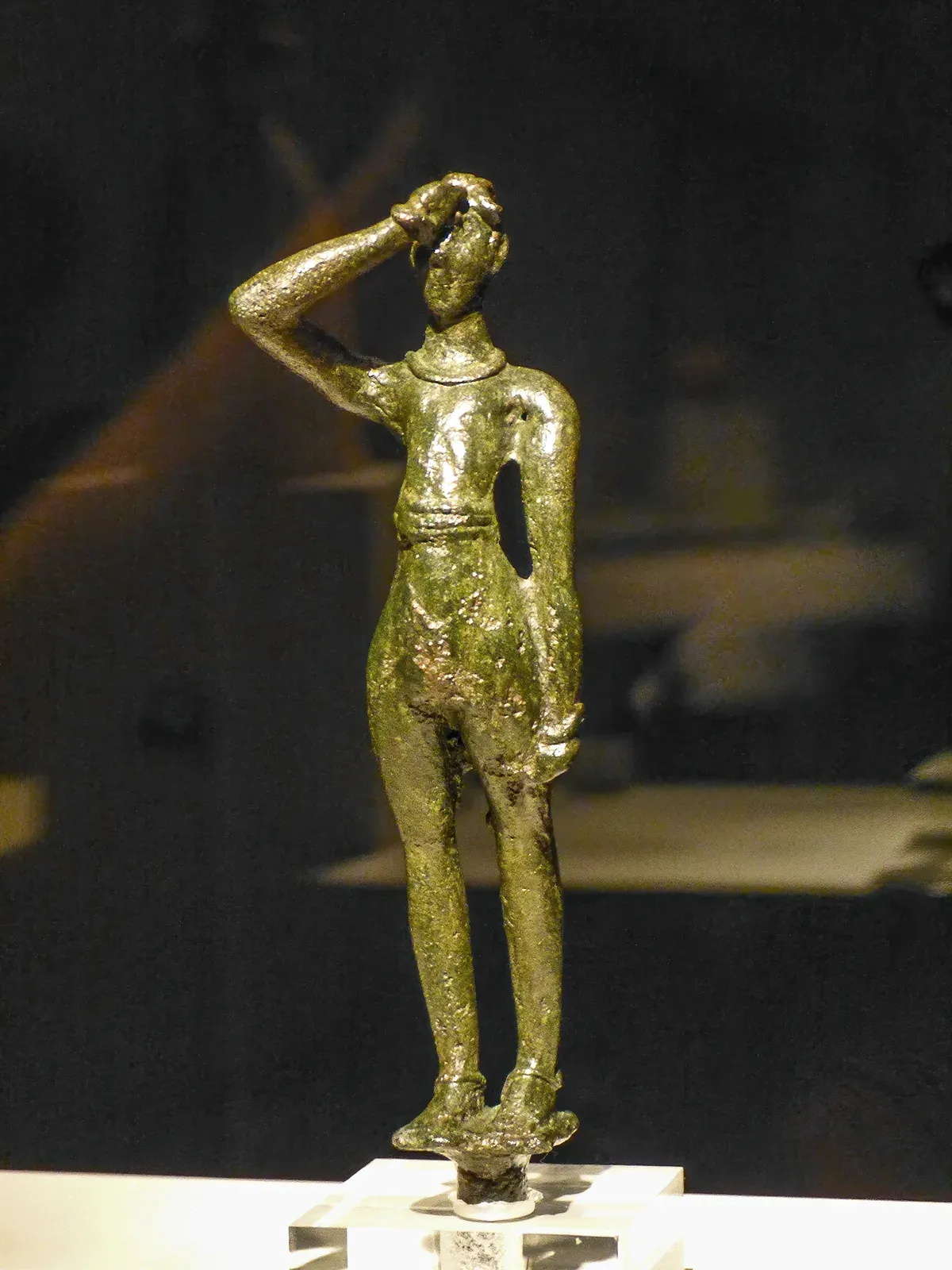
Photo: Mary Harrsch, CC BY-SA 4.0, via Wikimedia Commons
Hours and the Timed-Ticket Rule
This is the one Ministry site on Crete where the timed-entry rule is explicit rather than assumed.
The Confirmed Timed-Entry Rule
The museum's own page states that tickets can only be used on the scheduled day and time slot, a firmer rule than Knossos, Phaistos or Gortyn carry on their own pages. Book your slot before you travel rather than planning to buy at the door on a busy day.
Summer and Winter Hours
Summer hours (28 April to 31 October) run Monday, Tuesday and Thursday to Sunday from 08:00 to 20:00, with Wednesday opening later at 13:00 and running to 20:00. Winter hours are 08:30 to 15:30 most days, with Wednesday running 10:00 to 17:00.
The Quiet Window
The Wednesday afternoon opening is, by our observation, the quietest scheduled slot, since coach itineraries built around a standard morning visit skip it by default. Arriving at the 08:00 opening on any other day is the next best option before tour groups arrive.
Accessibility and Practical Notes
The museum's own visit page states that public areas are wheelchair accessible, with a ramp at the main entrance on Xanthoudidou street, an elevator between floors, and accessible toilets. A wheelchair is available free of charge at the entrance on provision of identification. Visitors with disabilities, plus one escort where the disability is 80 percent or over, are entitled to free admission on presentation of an ID and a recognised disability certificate.
The museum's public service and protocol offices, separate from the exhibition itself, keep their own hours, 09:00 to 15:00 and 07:30 to 15:30 respectively, with shortened hours of 07:00 to 13:00 on Christmas Eve and New Year's Eve.
Hours and the ticket-validity rule from the Ministry of Culture's museum information page and the museum's own visit page.
How Much Time to Give the Museum
The museum does not publish a recommended visit length. Three routings cover how people actually move through 27 rooms across two floors.
A fast pass through the ground-floor Minoan Collection alone, Rooms I to XII, covers the bulk of what most visitors come for. Adding the first-floor frescoes and Historic Period rooms roughly doubles the time. Adding the Sculpture Collection and the private donor rooms makes it a genuinely full museum visit rather than a highlights pass.
| Routing | On Site | Covers | Skips |
|---|---|---|---|
| Highlights only | 45 minutes to 1 hour | Rooms I-XII: the Phaistos Disc, the Snake Goddess figurines, Kamares Ware | Frescoes, Historic Period, Sculpture Collection |
| Full Minoan and fresco visit | 1.5 to 2 hours | Rooms I-XIII plus the Historic Period (XV-XXII) | The Sculpture Collection and the private donor rooms |
| Everything | 2.5 to 3 hours | All 27 rooms, including the Sculpture Collection (XXVI-XXVII) and Rooms XXIII-XXV | Nothing inside the museum |
Getting There From Knossos or the Harbour
The museum sits in central Heraklion, closer to the Venetian harbour than to Knossos.
The museum is a walkable distance from Heraklion's old harbour and Koules Fortress, and from Heraklion's old town with its Venetian loggia and the Morosini Fountain, worth the extra stop if you have the time. Knossos sits about 5 km southeast, roughly a 15-minute drive by our estimate, with no official source stating a fixed journey time or public transport fare between the two. Travellers doing both sites the same day generally visit Knossos first, when the morning is cooler, and the museum afterward, when the air-conditioned galleries are a welcome break from the heat.
The Museum in Dated Lines
The building has survived more disasters than the collection it houses.
-
1883
A Collection Begins
Antiquities from the first rediscovery of Minoan civilization are gathered into a simple collection, per Wikipedia's account.
-
1904-1912
First Dedicated Building
Archaeologists Iosif Hatzidakis and Stefanos Xanthoudidis push for, and get, a purpose-built museum.
-
1908
Official Founding
The museum's own site dates its formal founding to this year.
-
1926, 1930, 1935
Three Earthquakes
A trio of earthquakes nearly destroys the first building.
-
1937-1940
The Current Building
Architect Patroklos Karantinos builds a new, earthquake-resistant, Bauhaus-influenced structure on the site of a ruined Roman Catholic monastery.
-
1941
War Damage
The building is damaged during the German invasion, though the collection survives intact.
-
1952
Reopened
The museum reopens to the public after the war.
-
1964
New Wing
An additional wing expands the exhibition space.
-
2006-2014
Renovation and Reopening
A major renovation runs through this period, and the museum's own site dates the exhibition's completion, in its current 27-room layout, to 2014.
-
22 May 2025
Earthquake Damage
A magnitude 6.2 earthquake damages four exhibits, a reminder the island's seismic activity still touches the collection.
Sources: Wikipedia and the museum's own exhibition page.
Dos and Don'ts at the Museum
A compact building rewards a plan more than it rewards wandering.
Do
- Book a timed ticket ahead. Your slot is fixed once booked, so pick a time you can actually keep.
- Start on the ground floor with Rooms I-XII in order. The museum's own route is built chronologically, and skipping around loses the thread.
- Seek out the Phaistos Disc, the Prince of the Lilies and the Bee Pendant by name. They are each one case among many, easy to miss without knowing to look.
- Visit on a Wednesday afternoon if your schedule allows. The later opening is quieter, by our observation.
- Bring ID if you qualify for free or reduced admission. The Ministry's categories require it on the day.
Don't
- Don't assume you can walk in without a reserved slot. The museum's own page states tickets are valid only for the booked day and time.
- Don't skip Rooms XIV, XXIII and XXV. They hold the private donor collections and the Minoan-revival material most coach-tour visits miss entirely.
- Don't expect a combined Knossos-and-museum ticket from the Ministry itself. That older ticket is no longer valid, per the museum's own page.
- Don't rush the Sculpture Collection. It runs independently of the Minoan galleries and is easy to walk past if you assume the museum ends with the frescoes.
- Don't plan a photography-heavy visit without checking the museum's own photography rules first, since policies on flash and tripods can change.
Five Things Most Visitors Do Not Know
Quick, sourced facts for the gallery benches.
- The museum's own site dates its founding to 1908, a quarter-century after Wikipedia's account of the original 1883 antiquities collection, a gap that reflects the difference between a collection existing and a museum being formally organised (museum's own exhibition page, Wikipedia).
- The current building stands on the site of a ruined Roman Catholic monastery, demolished to make way for architect Patroklos Karantinos's earthquake-resistant 1937-1940 structure (Wikipedia).
- The museum's own garden still preserves the ruins of the Venetian Monastery of St Francis, a second religious building's remains sitting quietly outside the exhibition halls (museum's own exhibition page).
- The Sculpture Collection's Roman-era busts and statue copies date from the same centuries Gortyn, not Knossos, ran the island as the Roman province's capital (museum's own exhibition page).
- A magnitude 6.2 earthquake on 22 May 2025 damaged four exhibits, a reminder that the seismic activity which destroyed the museum's first building in the 1920s and 1930s has not gone away (Wikipedia).
The Museum and Nearby on the Map
Heraklion Archaeological Museum sits inside the city, between the harbour and the road out to Knossos.
- 1 Heraklion Archaeological MuseumThe Minoan finds from Knossos and Phaistos, including the Phaistos Disc. $22.50 (€20), timed entry.
- 2 Koules FortressThe Venetian sea fortress at the old harbour, a short walk from the museum. $11.23 (€10).
- 3 KnossosThe Minoan palace the museum's best finds were excavated from, about 5 km southeast. $22.50 (€20).
- 4 HeraklionCrete's capital, with a Venetian old town around the museum and harbour.
Numbers match the pins on the map.
Near the Museum
Three stops within easy reach, all on the Heraklion side of the island.
Koules Fortress
The Venetian fortress guarding Heraklion's old harbour, an easy add-on after the museum. The city's old town, with its Venetian loggia and fountain, sits between the two and is worth the extra hour.
Short walk Check info & availabilityKnossos
The palace most of this museum's best objects came from. See it before the museum for the context, or after for the air conditioning.
About 5 km, our estimate Check info & availabilityKnossos Tickets Compared
If you are booking Knossos and the museum the same day, this page compares the combined e-ticket against buying each separately.
N/A Check info & availabilityHeraklion Archaeological Museum Questions
Is Heraklion Archaeological Museum worth it?
Yes, especially if you are visiting Knossos or Phaistos. Most of what made those sites famous, the frescoes, the Phaistos Disc and the Snake Goddess figurines, is physically here rather than on site.
How long does the Heraklion Archaeological Museum take?
The museum does not publish a recommended length. Our routing is 1.5 to 2 hours for the main Minoan galleries, longer if you read every label.
Do I need a timed ticket for the museum?
Yes. The museum's own page states tickets are valid only for the booked day and time slot, a firmer rule than Knossos uses. Book ahead rather than planning to arrive without a slot.
What are the museum's highlights?
The Phaistos Disc, the Bull-Leaping fresco original, and the Snake Goddess figurines are the three most looked-for objects, alongside the broader Minoan gold and pottery collection.
How much does it cost to visit the museum?
$22.50 (€20) full price, reduced to $13.47 (€12) for EU citizens 65 and over between November and March. Our ticket with audio guide is $28.87.
Can I combine the museum with Knossos?
Yes. A combined e-ticket books both entries at once. The Ministry's older combined ticket is no longer valid, per the museum's own page, so this platform combo is the current way to book both in one order.
How many rooms does the museum have?
27, laid out across two floors: the Minoan Collection in Rooms I-XII on the ground floor, the Frescoes and Historic Period in Rooms XIII and XV-XXII on the first floor, and the Sculpture Collection in Rooms XXVI-XXVII back on the ground floor.
Is the museum wheelchair accessible?
Yes. The museum's own page states public areas are wheelchair accessible, with a ramp at the main entrance, an elevator between floors, accessible toilets, and a free wheelchair available at the entrance on request.
The Museum on Video
Heraklion Archaeological Museum Is a Visual Feast of Minoan Treasures
A quick tour of the Minoan highlights, including the Phaistos Disc case.
Video: Greece SecretsArchaeological Museum of Heraklion
A fuller walkthrough of the galleries in order.
Video: Exploring WorldHeraklion Archaeological Museum, Crete, Greece, Walking Tour
A 2024 walking tour showing the current layout of the renovated building.
Video: Sep AsemaniWe may earn a commission if you book through one of our links, at no extra cost to you. Full affiliate disclosure