 Crete Island Guide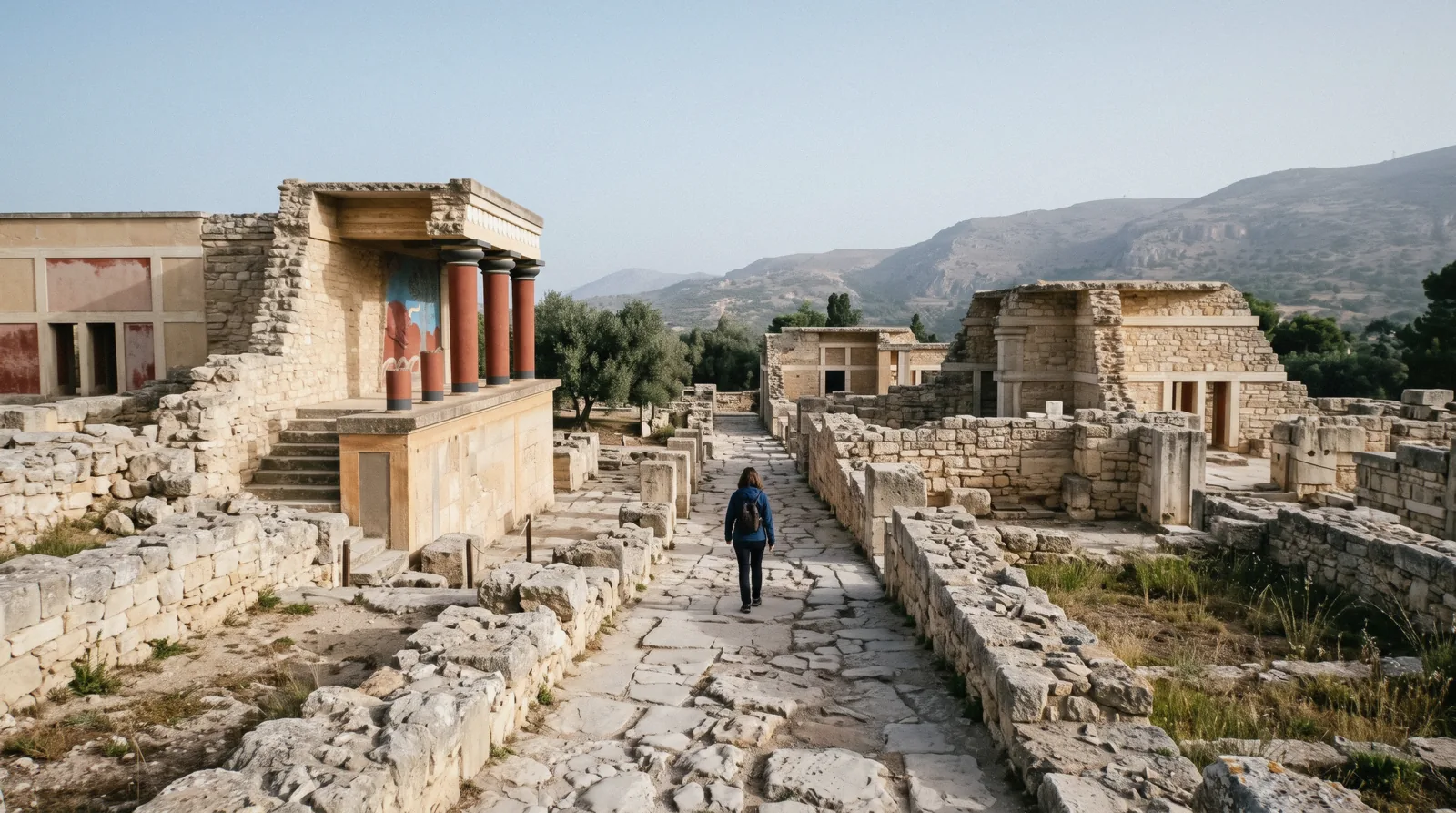
Knossos is the Bronze Age palace complex that gave our Crete, Greece travel guide its best-known ruins and its most-told myth, the labyrinth of King Minos and the Minotaur. This guide covers what the Ministry of Culture actually publishes about hours and prices, what the excavated rooms show you today, and how to fit the site into a Heraklion day alongside the Heraklion Archaeological Museum, where most of what was found here now lives.
Quick answer Knossos in one minute
Knossos is the largest Minoan palace ruin on Crete, about 5 km southeast of Heraklion, and the source of the Minotaur and Labyrinth myth. The Ministry of Culture charges $22.50 (€20) full price and $11.23 (€10) reduced, with free admission on set days including 18 April and 28 October. Summer hours run from 08:00, closing between 18:00 and 20:00 depending on the fortnight, and winter hours from 1 November run 08:30 to 17:00. Plan on 2 to 2.5 hours for the main circuit. What you see today is largely Arthur Evans's early-20th-century reconstruction in concrete and paint rather than an untouched ruin, which is worth knowing before you go.
Key takeaways
- Book your entry before you arrive. The Tiqets entry ticket with a digital guide and the GetYourGuide skip-the-line guided walk both move you past the ticket-booth line, compared in full on our Knossos tickets page.
- Pair it with the frescoes. The originals of the copies painted on the palace walls hang at the Heraklion Archaeological Museum, and one combined e-ticket covers both sites.
- Arrive at opening or after 17:00. Tour-bus groups fill the Throne Room corridor from mid-morning, by our observation.
- Budget 2 to 2.5 hours. For a longer day, a guided tour already pairs Knossos with the Cave of Zeus and the Lasithi villages.
Key facts
Opening hours
| 1 April – 31 August | 08:00–20:00 |
|---|---|
| 1–15 September | 08:00–19:30 |
| 16–30 September | 08:00–19:00 |
| 1–15 October | 08:00–18:30 |
| 16–31 October | 08:00–18:00 |
| 1 November – 31 March (winter) | 08:30–17:00 |
Closed 1 January, 25 March, 1 May, Easter Sunday, 25-26 December. Heat alerts can close the site at midday in summer, as on 22 July (12:00-17:00).
Admission
- Adult
- $22.50 (€20)
- Reduced
- $11.23 (€10), for the categories listed on the Ministry's reduced-admission page
- Free
- 6 March, 18 April, 18 May, the last weekend of September, 28 October
Planning it
- Time needed
- Not stated by the Ministry. Our routing: 2 to 2.5 hours for the full circuit, 3+ hours at a slower pace with the Little Palace area.
- Book ahead
- Recommended — a few days
- Address
- Knossos Avenue, about 5 km southeast of Heraklion. The Ministry's own access note names city bus line 2, marked "Knossos", from Heraklion.
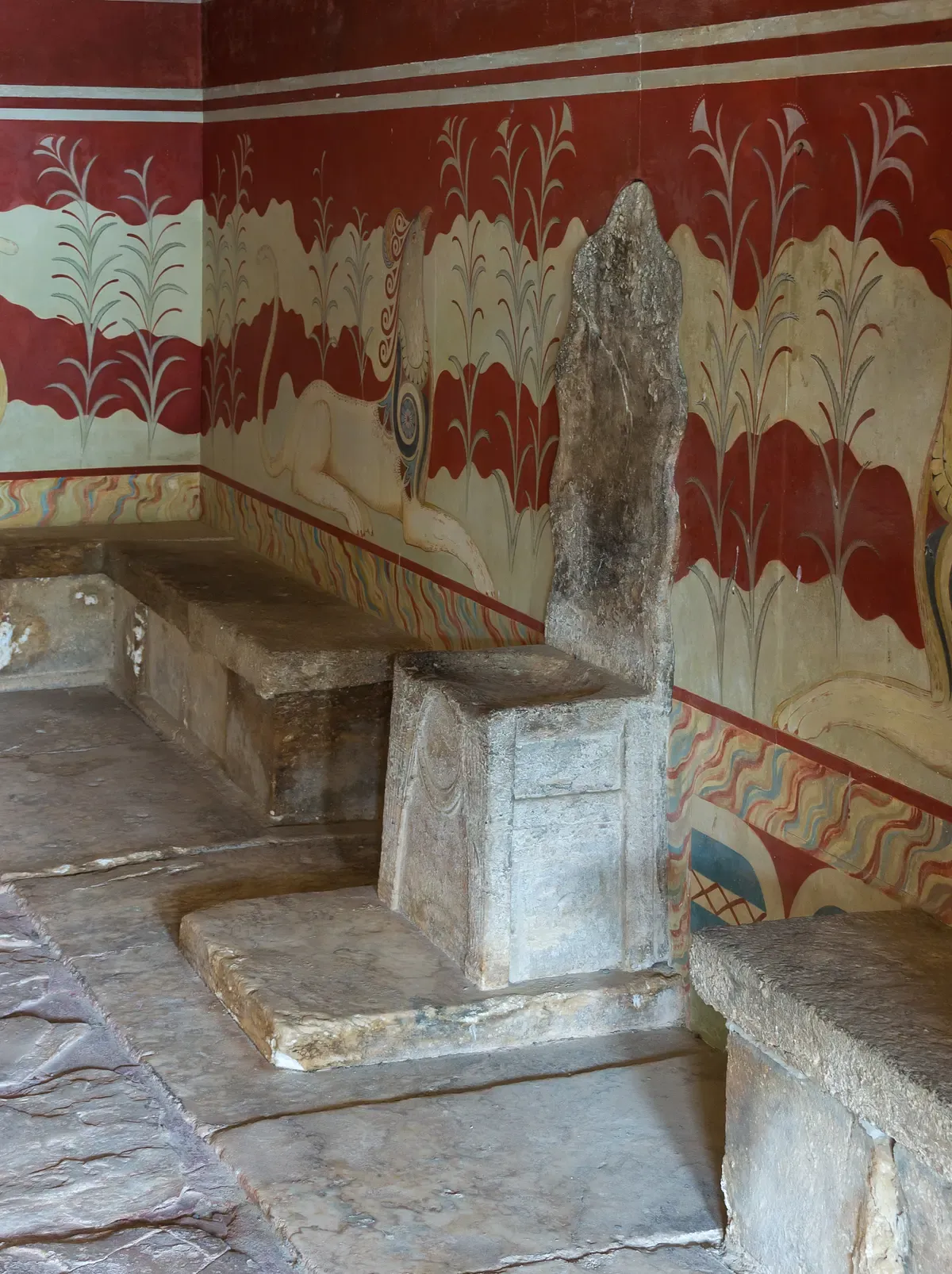
Photo: Jebulon, CC0, via Wikimedia Commons
Knossos Tickets at a Glance
The Ministry of Culture sets one gate price for everyone. The three cards below are the ways we can get you past the ticket window, compared in full on our dedicated Knossos tickets page.
Walk the ruins at your own pace with a ticket and a phone guide, or have a licensed guide explain the Throne Room and the myth as you go?
| Option | Price | Includes | Best For | Book |
|---|---|---|---|---|
| Entry ticket + digital guideSelf-guided visitors | $29.20 | Knossos admission plus a self-paced Hellenic Heritage audio guide on your phone | Independent visitors who want the entry fee covered without a live guide | Check Availability |
| Skip-the-line guided walkGuided first-timers | From $100.17 | A 90-minute walk with a licensed guide, a small group kept audible in the Throne Room | First-timers who want the myth and the ruins explained together | Check Availability |
| Knossos + museum e-ticketsMuseum-and-palace pairing | From $50.65 | Knossos and Heraklion Archaeological Museum entries, each with its own audio guide | Visitors doing both sites the same day | Check Availability |
Prices are each platform's own listed figure in US dollars. The Ministry's own gate price is $22.50 (€20) full or $11.23 (€10) reduced. The full comparison, including the Viator shared-group option, is on our Knossos tickets page. Figures current for Q4 2026.
Ways to Book Knossos
Five ways to get in, from a plain entry ticket to a full day that adds the Cave of Zeus. The complete comparison, including what each one includes, is on our Knossos tickets page.
 from $29.20
Palace of Knossos: Entry Ticket + Digital Hellenic Heritage Guide
The plain entry ticket for Knossos with the Hellenic Heritage digital guide on your phone, for visitors who want to walk the palace at their own pace.
Check Availability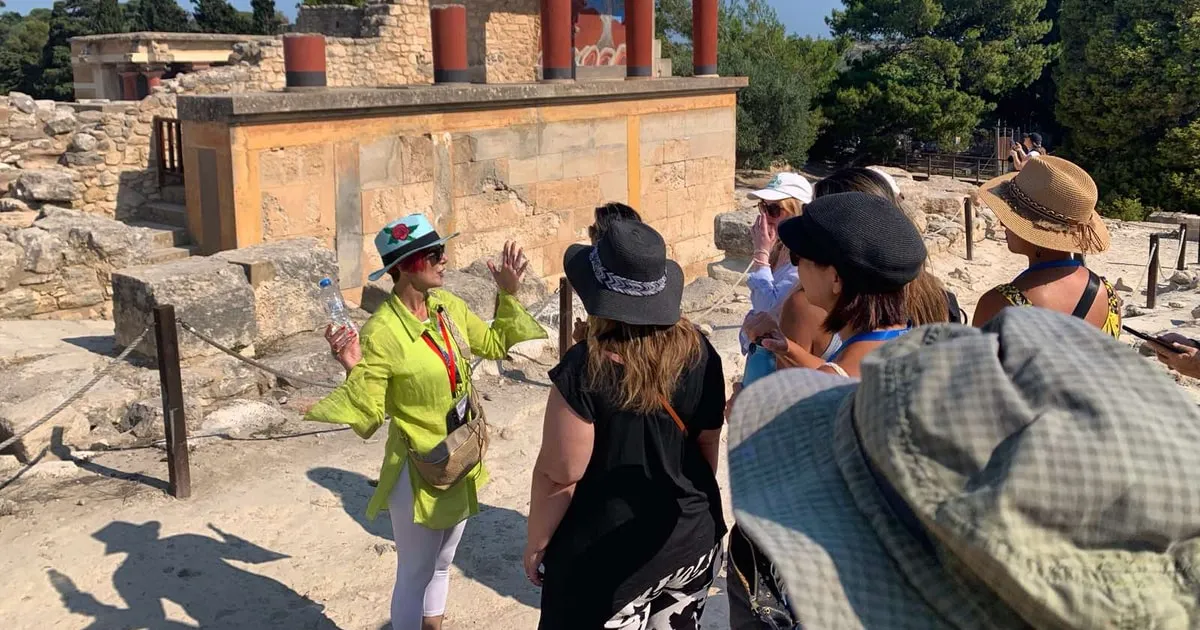 from $100.17
Knossos: Knossos Palace Skip-the-Line Guided Walking Tour
A 90-minute licensed-guide walk through the palace with the skip-the-line entry handled for you; the small-group format keeps the guide audible in the Throne Room queue.
Check Availability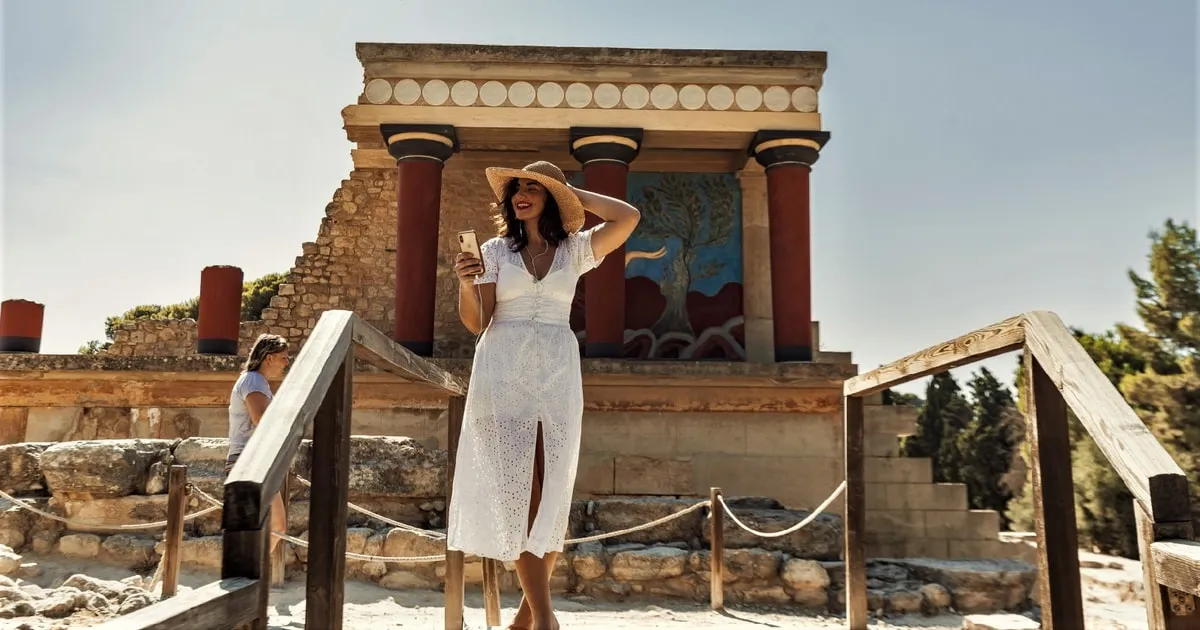 from $50.65
Knossos Palace and Museum E-Tickets with Audio Guides
Two e-tickets in one booking, Knossos and the Heraklion Archaeological Museum, each with an audio guide, so the frescoes and the palace they came from fit one day.
Check Availability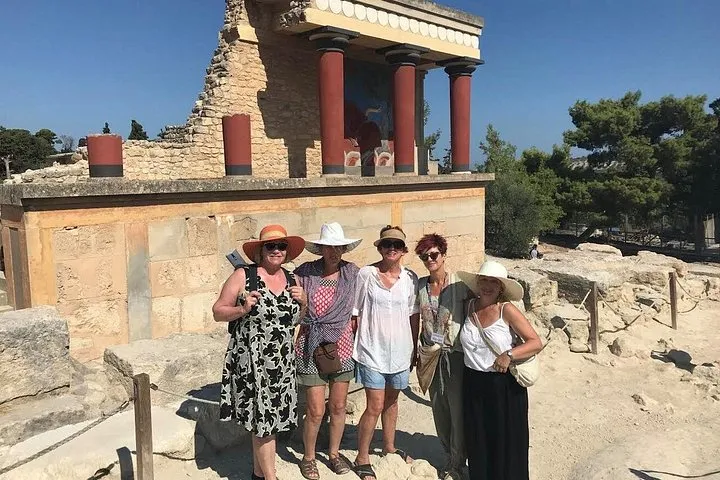 from $102.06
Knossos Palace Skip-the-Line Ticket (Shared Tour Group)
A shared guided group of up to 22 with the €20 Knossos entry included; options add the museum or a Heraklion pick-up.
Check Availability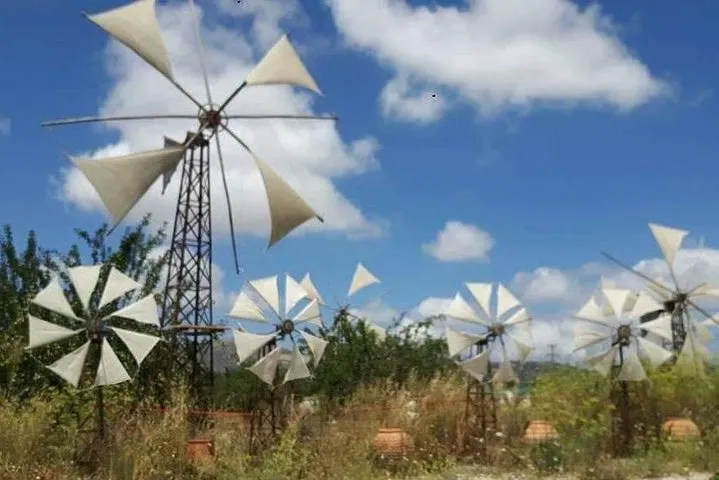 from $131.88
Knossos - Zeus Cave - Old Traditional Villages-Olive Oil Factory
A full day from the Heraklion side: Knossos in the morning, then the Cave of Zeus, mountain villages and an olive-oil mill.
Check AvailabilityPrices, ratings and details are the platform's own. dollar figures are the listed prices — the platform bills in your account's currency.
What Knossos Is: The Palace and the Minotaur Myth
Knossos earns its fame two ways, as the largest excavated Minoan palace and as the stage for the oldest story Crete tells about itself.
The Minoan Palace
The palace was the largest and most important centre of Minoan civilization, continuously built over from the Neolithic period (7000-3000 BC) through Roman times, per the Ministry's own history page. Four wings wrap a central courtyard holding the royal quarters, workshops, shrines, storerooms and the Throne Room. The first palace went up in the 19th to 17th centuries BC.
A disaster destroyed it, and a second, grander palace replaced it in the 16th to 14th centuries BC, the one most of today's ruins reconstruct. Around 1450 BC the palace was partially destroyed again, and Mycenaeans from the Greek mainland resettled the site, a transition the Ministry's own chronology records without naming a single cause.
The Minotaur and the Labyrinth
The myth layered onto these ruins long after the Minoans built them. King Minos, the Labyrinth, the Minotaur, and the story of Daedalus and Icarus are all tied to Knossos in Greek tradition, and the Ministry's own description page calls the palace "connected with thrilling legends" rather than treating any of them as history. Linear B tablets from the 14th century BC, the Mycenaean-era script found on site, record the city's name as ko-no-so, close to the modern Greek Knossos.
There is no ancient maze under the palace. What likely gave rise to the Labyrinth story is the palace's own maze-like floor plan, hundreds of interconnecting rooms on several levels, though that link is a modern inference rather than a Ministry claim.
From Minos Kalokairinos to Arthur Evans
A Cretan merchant named Minos Kalokairinos made the first small excavations in 1878, more than two decades before the site most visitors picture was ever uncovered. Arthur Evans, an English archaeologist, bought part of the site and ran systematic excavations from 1900 to 1931 with the British School of Archaeology at Athens, bringing the palace, a large section of the Minoan city and its cemeteries to light. Evans also restored the palace to the form it has today, reconstructing sections in concrete and repainting the frescoes now on view, interventions the Ministry's own page attributes to Evans directly rather than to original Minoan material.
Excavation continues under the British School and the Greek Archaeological Service, who the Ministry says carry out only consolidation work where the monuments need it.
History from the Ministry of Culture's Knossos history and description pages.
What to See: The Palace Circuit
The ticketed circuit moves through a route the Ministry's own monument list makes it possible to plan, four wings and a few satellite buildings beyond the main palace block.
The Palace Itself
The Palace of Knossos is the largest of the preserved Minoan palatial centres, the Ministry's own description states, with four wings arranged around a central courtyard. Inside are the royal quarters, workshops, shrines, storerooms, repositories, the Throne Room and banquet halls, dated broadly to 2000-1350 BC. The Throne Room holds the alabaster seat the site is named for in most guidebooks, flanked by griffin frescoes, copies painted over the original fragments under Evans's restoration.
The Grand Staircase, a tight well of superimposed flights linking several storeys, is one of the few places on site where the building's original scale, rather than a single restored room, is obvious.
The Little Palace and the Royal Villa
West of the main palace sits the Little Palace, built with the same scraped wall masonry, reception rooms and a lustral-basin shrine as the royal building nearby, dated to the 17th-15th centuries BC. Northeast of the palace, the Royal Villa shows a double staircase and a pillar crypt, strongly religious in character, and the Ministry's own page suggests it may have housed an aristocrat or a high priest rather than the royal family itself. Both sit a short walk from the main circuit and are easy to miss if you only follow the signed route.
The Roman Villa of Dionysos
Not every ruin on site is Minoan. The Villa of Dionysos is a private, peristyle house from the Roman period, decorated with mosaics by an artist named Apollinarius depicting the god Dionysos, built after the Roman general Quintus Caecilius Metellus Creticus captured the city in 67 BC. It is a reminder that Knossos stayed inhabited for roughly five thousand years after its first Neolithic settlers, long past the Minoan collapse most visitors come to see.
What's Reconstruction, What Isn't
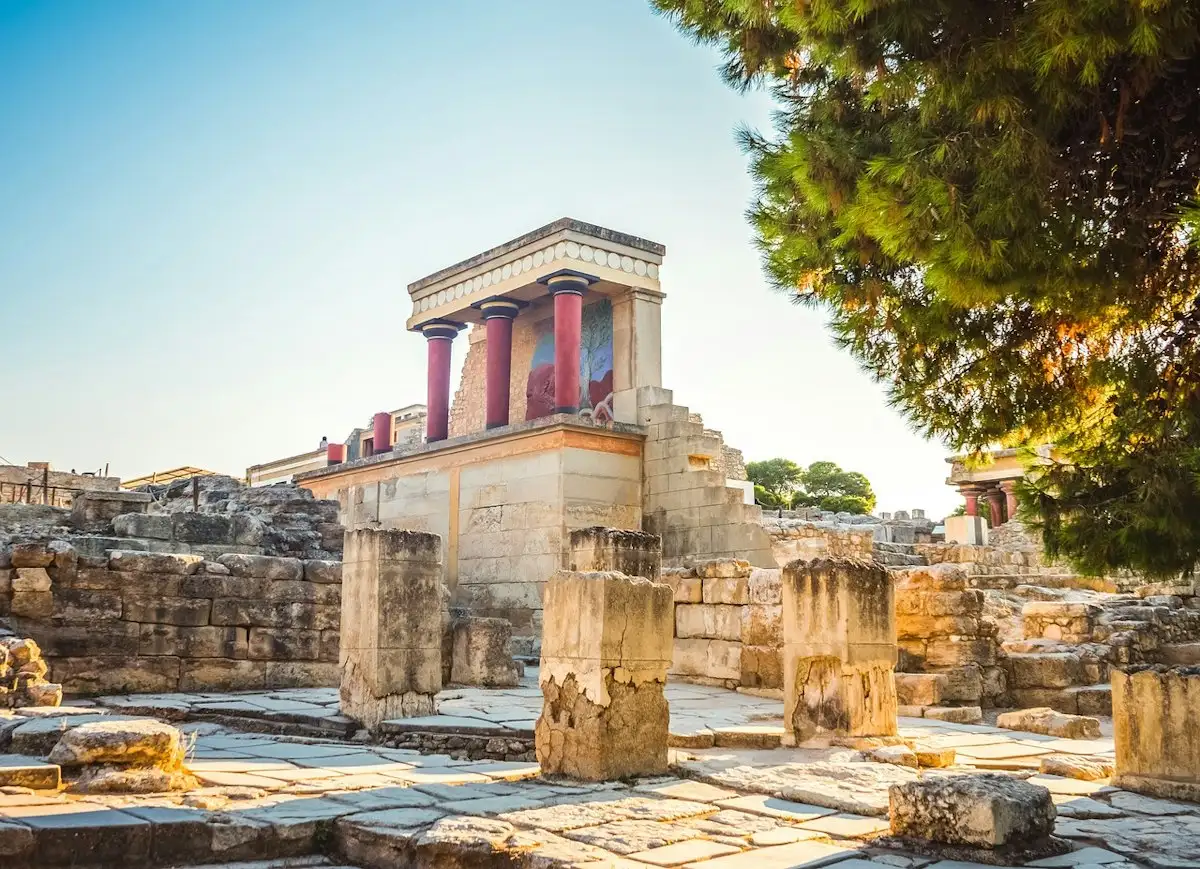
The red columns, the griffin frescoes and several upper floors are Evans's early-20th-century reconstruction, built to protect what his dig exposed rather than to fake an untouched ruin. The Ministry's own history page states plainly that "the restoration of the palace to its present form was carried out by Arthur Evans" and that the Archaeological Service today performs only consolidation. Knowing this going in changes what you are looking at.
The stonework underfoot and the floor plan are largely original. Much of the colour overhead is a 1920s best guess.
Monument descriptions from the Ministry of Culture's Knossos site monuments page.

Photo: Cayambe, CC BY-SA 4.0, via Wikimedia Commons
How Much Time to Give Knossos
The Ministry does not publish a recommended visit length. Three routings cover how people actually do it, from a fast loop to a full day that folds in the museum.
A bare circuit of the roped walkway covers the Throne Room, the Grand Staircase and the central courtyard. Add the Little Palace and Royal Villa detour and the Roman villa, and the visit roughly doubles. The table below is our own routing, not an official figure.
| Routing | On Site | Adds | Skips |
|---|---|---|---|
| Quick circuit | about 1 hour | Throne Room, Grand Staircase, central courtyard | Little Palace, Royal Villa, Villa of Dionysos |
| Full palace visit | 2 to 2.5 hours | The quick circuit plus the Little Palace, Royal Villa and south propylaeum | Nothing inside the fenced site |
| Knossos + museum day | Half a day | The full visit plus the Heraklion Archaeological Museum for the fresco originals, bookable as one combined ticket | A side trip beyond Heraklion |
Hours, Crowds and the Quiet Slots
Opening hours step down by the fortnight from September, and the crowd pattern tracks the coach-tour schedule more than the clock.
How the Summer Hours Step Down
From 1 April the site opens 08:00 to 20:00. From 1 September the close moves to 19:30, then 19:00 from 16 September, 18:30 from 1 October and 18:00 from 16 October. Winter hours start 1 November at 08:30 to 17:00 and run through the cold months.
Last admission is generally shortly before closing, per the Ministry's posted rule. Good Friday opens 12:00-17:00 only, a shortened day worth checking if your trip lands on it.
The Midday Heat Closure
Extreme heat can close the site outright. On 22 July the Ephorate of Antiquities of Heraklion closed Knossos from 12:00 to 17:00 for high temperatures, a step it has taken in past summers too. If you are visiting in July or August, build a midday backup into the day, since a heat closure is announced with little notice.
The Quiet Slots
No official source publishes Knossos visitor numbers by hour, so this is our own observation rather than a cited figure. Coach groups and cruise-ship transfers cluster from roughly 10:00 to 13:00, bunching at the Throne Room corridor and the Grand Staircase, the two narrowest points on the route. The first hour after opening and the hour before close are consistently quieter by our experience.
Closed Days
Knossos closes entirely on 1 January, 25 March, 1 May and Easter Sunday, and on 25-26 December. Free admission applies on 6 March, 18 April, 18 May, the last weekend of September and 28 October, the Ministry's standard free-day calendar for state archaeological sites.
Hours and closures from the Ministry of Culture's Knossos information page.
Getting There: Bus, Car or Tour
Knossos sits inland from Heraklion's waterfront, close enough for a city bus and far enough that a tour's included transport earns its price on a hot day.
By City Bus
The Ministry's own access note names city bus line 2, marked "Knossos", running from Heraklion. We could not source a current fare or frequency from an official page, so confirm both locally before relying on it.
By Car or Taxi
Knossos is roughly 5 km southeast of central Heraklion. We have no official source for parking fees or a fixed taxi fare for the route, so treat either as a local, on-the-day cost rather than a figure we can print here.
On a Guided Tour
Every guided option on this page lists its own meeting point rather than a single universal one. The skip-the-line guided walk meets near the site, while the longer day tour that adds the Cave of Zeus includes hotel pickup across the Heraklion area. If you are not driving yourself, a tour with included transport removes the only uncertain leg of the day, the bus or taxi connection from town.
Five Things Most Visitors Do Not Know
Quick, sourced facts for the ride back to Heraklion.
- Knossos was first dug into in 1878 by a Cretan merchant named Minos Kalokairinos, more than two decades before Arthur Evans arrived (odysseus.culture.gr, Ministry of Culture).
- Most of the red columns and painted frescoes on site today are Arthur Evans's own early-20th-century reconstruction, not untouched Minoan originals. The Ministry's own history page credits the restoration directly to Evans (odysseus.culture.gr).
- The site was lived on almost continuously for about five thousand years, from the Neolithic period (7000-3000 BC) through the Roman era, longer than the Minoan palace itself stood (odysseus.culture.gr).
- Linear B tablets from the 14th century BC already name the city ko-no-so, a name that survived, barely changed, into the modern Greek Knossos (odysseus.culture.gr).
- The Roman-era Villa of Dionysos, with mosaics by an artist named Apollinarius, was built after the city fell to the Roman general Quintus Caecilius Metellus Creticus in 67 BC, making part of the site more than a thousand years younger than the fall of the Minoan palace (odysseus.culture.gr).
Knossos in Dated Lines
A short chronology of the site, drawn from the Ministry of Culture's own history and description pages.
-
7000-3000 BC
Neolithic Settlement
The hill above the Kairatos river is settled from the Neolithic period, the start of roughly five thousand years of continuous habitation.
-
19th-17th century BC
The First Palace
An early palatial centre is built at Knossos, the first of what the Ministry calls the site's "first palaces".
-
16th-14th century BC
The Second Palace
A larger palace replaces the first, the building whose ruins form most of today's ticketed circuit.
-
1450 BC
Partial Destruction and Mycenaean Settlement
The palace is partially destroyed, and Mycenaeans from the Greek mainland resettle Knossos afterward.
-
14th century BC
The City Named in Linear B
Mycenaean-era Linear B tablets record the city as ko-no-so.
-
67 BC
Roman Capture
The Roman general Quintus Caecilius Metellus Creticus takes the city, opening the period that built the Villa of Dionysos.
-
1878
First Excavation
Cretan merchant Minos Kalokairinos conducts the first small dig at the site.
-
1900-1931
Arthur Evans's Excavation
Arthur Evans directs systematic excavation, uncovering the palace, a large section of the Minoan city and its cemeteries, and restores the palace to its present form.
-
today
Managed by the Ephorate of Antiquities of Heraklion
The site operates under the Greek Ministry of Culture and Sports, with tickets sold at the gate and through the Ministry's own online system.
Sources: the Ministry of Culture's Knossos history and description pages.
Dos and Don'ts at Knossos
Small decisions that change the visit more than any ticket choice.
Do
- Arrive at opening (08:00 in summer) or after 17:00 to dodge the cruise-coach wave between 10:00 and 13:00, by our observation.
- Book your entry ticket or guided walk before you arrive. The ticket-booth line is the slow one.
- Bring water, a hat and sun protection. The site has little shade and can close at midday in extreme heat, as it did on 22 July.
- Wear closed, grippy shoes. The stone paths and the Grand Staircase well are uneven and slick when wet.
- Pair the visit with the Heraklion Archaeological Museum the same day. The frescoes you see as copies at Knossos hang there as originals.
Don't
- Don't expect an untouched ruin. Most of the red columns and painted walls are Arthur Evans's early-20th-century reconstruction, not Minoan originals.
- Don't assume a quiet site. Knossos is among the most visited archaeological sites in Greece, and the main corridor narrows exactly where the crowd peaks.
- Don't plan around a confirmed timed-entry slot. The Ministry's own page sets ticket validity by day, not a booked arrival window, unlike the Heraklion museum next door.
- Don't count on a published bus fare or parking price. Neither is stated on an official page, so confirm locally.
- Don't skip the Little Palace and Royal Villa if your visit allows it. Both sit off the main signed loop and most coach groups never reach them.
Knossos and Nearby on the Map
The palace sits inland from Heraklion's harbour, with the museum that holds its best finds a short drive back toward the coast.
- 1 KnossosThe largest excavated Minoan palace on Crete. $22.50 (€20) full price, $11.23 (€10) reduced. Allow 2 to 2.5 hours for the full circuit.
- 2 Heraklion Archaeological MuseumThe frescoes, the Phaistos Disc and the finds excavated at Knossos, a short drive toward the coast. $22.50 (€20).
- 3 Koules FortressThe Venetian sea fortress guarding Heraklion's old harbour, on the same side of town as the museum. $11.23 (€10).
- 4 HeraklionCrete's capital and the base most Knossos day trips start from.
- 5 Cave of Zeus and the Lasithi PlateauThe cave myth says Zeus was born in, up on a mountain-ringed plateau about an hour east. $16.84 (€15).
Numbers match the pins on the map.
Near Knossos
Three pages that extend a Knossos day, whether you stay in Heraklion or push further east.
Heraklion Archaeological Museum
The originals of the frescoes you see copied on the palace walls, plus the Phaistos Disc, sit in this museum back toward the coast. A combined e-ticket covers both sites.
20-minute drive Check info & availabilityKnossos Tickets Compared
Every way to book Knossos side by side, including the Viator shared-group option and what each listing actually includes.
Same site Check info & availabilityCave of Zeus and the Lasithi Plateau
The cave where myth says Zeus was born, on a mountain plateau ringed by stone windmills. Several day tours pair it with a Knossos morning.
About an hour's drive Check info & availabilityKnossos Questions
What is special about Knossos?
Knossos is the largest excavated Minoan palace on Crete and the site most closely tied to the Minotaur and Labyrinth myth. It was also the first Minoan site excavated on a large scale, by Arthur Evans from 1900 to 1931, and much of what visitors see is his early-20th-century reconstruction rather than an untouched ruin.
Is the Palace of Knossos worth visiting?
For most visitors to Crete, yes. It is the island's best-known archaeological site and the easiest Minoan palace to reach from Heraklion, with the Throne Room, the Grand Staircase and the reconstructed frescoes giving a clear sense of Minoan palace life. Pairing it with the Heraklion Archaeological Museum for the original frescoes rounds out the half-day.
Why was Knossos abandoned?
The Ministry's own chronology does not give a single cause. It records a partial destruction around 1450 BC, after which Mycenaeans from the mainland resettled the site, followed by continued Hellenistic and Roman-era habitation. The city's final decline as a settlement is not pinned to one dated event in the sources we could check.
What is Knossos in Greek mythology?
Knossos is the legendary seat of King Minos and the setting for the myth of the Labyrinth and the Minotaur, along with the story of Daedalus and Icarus. The Ministry's own description page calls these "thrilling legends" rather than history, and no excavated structure at the site is identified as an actual labyrinth.
How much does it cost to visit Knossos?
The Ministry of Culture charges $22.50 (€20) full price and $11.23 (€10) reduced. Our tickets comparison lists ways to book that add a digital guide, a live guide or a combined museum entry for a different price.
How long does a Knossos visit take?
The Ministry does not publish a recommended length. Our routing is about 1 hour for a quick circuit of the Throne Room and Grand Staircase, or 2 to 2.5 hours for the full site including the Little Palace and Royal Villa.
Where Knossos Fits in a Heraklion Day
Knossos works as a half-day on its own or as the anchor for a longer day east or into the museum.
The simplest pairing is the museum run. Visit Knossos in the morning before the heat and the coach groups peak, then drive back toward the coast for the Heraklion Archaeological Museum, where the Minoan originals of the copies you just saw are on display. The combined e-ticket covers both in one booking.
A walk down to the harbour afterward adds Koules Fortress, the Venetian fort guarding Heraklion's old port, for travellers who want a third stop without another drive. For a longer day that leaves Heraklion behind entirely, one full-day tour already strings Knossos together with the Cave of Zeus on the Lasithi Plateau and a stop at an olive-oil mill, useful if you would rather book one seat than plan three separate trips.
Knossos on Video
Crete: How to Visit the Knossos Palace
A practical walkthrough of the site layout and what to expect at the gate.
Video: Greece ExplainedKnossos Palace in 4K: Discover the Heart of Minoan Civilization
A close look at the Throne Room, the frescoes and the Grand Staircase.
Video: DiscoverVisionSolving the Ancient Mystery of Knossos and the Minotaur
How the Labyrinth myth grew out of the palace's own excavated floor plan.
Video: History HitWe may earn a commission if you book through one of our links, at no extra cost to you. Full affiliate disclosure